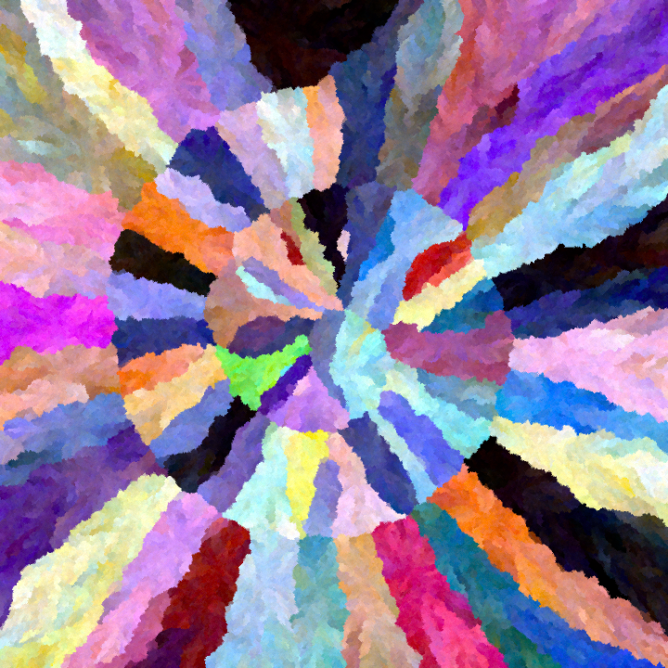
This post is current as of 2024-09-15.
I'm an independently trained digital abstract, generative and (to a much lesser extent) traditional media artist. My muse ranges freely, and I prefer to let my work speak for itself, and to let people say what effect it has on them independently. For this reason, I avoid writing about my art. If I accompany my art with writing, I prefer minimalist plain English and to only say things that inform the viewer experience in ways they wouldn't necessarily know just from looking at it. (This offends sensibilities that expect hifalutin' International Art English. Do a web search on that term and weep.)
Around 2014, my neglect of my artistic creative abilities began to bother me enough that I undertook in earnest to make digital abstract art. I have been prolific since then, and at this writing my art self-publication is far behind my art creation. My backlog of created works is many times larger than what is published.
I'm also a self-trained coder, and in recent years found the fun intersection of code and art in generative art, where an artist can collaborate with a computer's ability to do unpredictable things quickly. A short explanation of "generative art" if you're unfamiliar with that: a real-world example of it is to take graph paper, dice, and pen, and roll the dice to determine the start point of a line. For example if you have two twelve-sided die, and roll a 9 with one and a 5 with the other, it would tell you the start point is row 9, column 5. Roll again to find the point that line will end, draw a straight line from the origin to that, roll for a next point and draw another straight line, and so on, until you have the number of lines you want (say, 10). The result is almost always going to be a random scribble of straight lines decided by entropy. For generative art in the virtual world of a computer, it can roll the dice for you (and literally do billions of dice rolls a second if you want). You can do random variations with practically any kind of visual element, composition, texture, or combination of these or any other art or creative or technical element you can imagine, usually quickly if you design things well.
Since around 2014, I have also been making computer scripts to assist in art batch processing, preparation, and art generation. Most of those are in my _ebDev repository.
I have more ideas than I have time for in many creative domains. I execute on ideas regularly when I can. I keep ideas in a kanban board (on Trello) and use something like a software development "sprint" arrangement, but alas I don't yet have the luxury of regular set sprint intervals. And probably like everyone who uses a kanban, I have far more in the backlog than I do in progress.
When I'm able to devote more time to creating and publishing, I'm industrious with it.
Here, inline, are some of the works that I'm more proud of and which have been better received.
Mitosis
Generative work in p5js (JavaScript library). At this writing the parameters for it and debugging are in finalization. [Edit for honesty: that has been true for literally years. It's a huge undertaking and I'm picky.] Here's a favorite output.
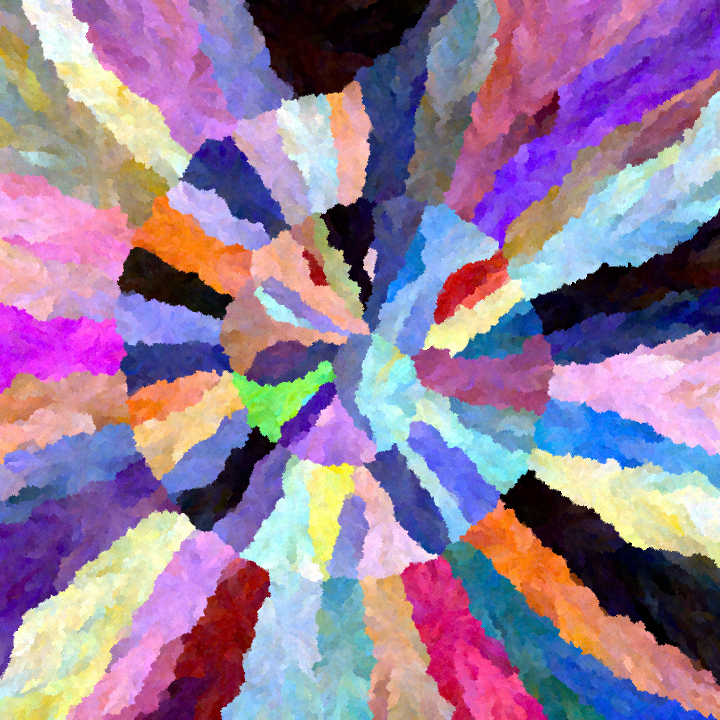
Images and an explanation of this work are not yet posted to this blog. A live demo is here. Reload that page for a new randomly made variant. A gallery of outputs is here (thumbnails open sub-galleries). This is a collaboration with someone by the moniker "Longshanks" (mostly my ideas, mostly his code). It is a port and further work on "Color Growth." The following video shows animated output from that, by stringing render progress images together:
By Small and Simple Things
Interactive generative work exhibited at the Springville Museum of Art (Provo UT) on a 6' tall kiosk. Best thing about this: telling kids who visited the museum that they can touch the art. Here's the announce post, and here inline is a video. This is a collaboration with Daniel Bartholomew (mostly his ideas, all my code).
2015-10-18 Abstraction in Four Variants
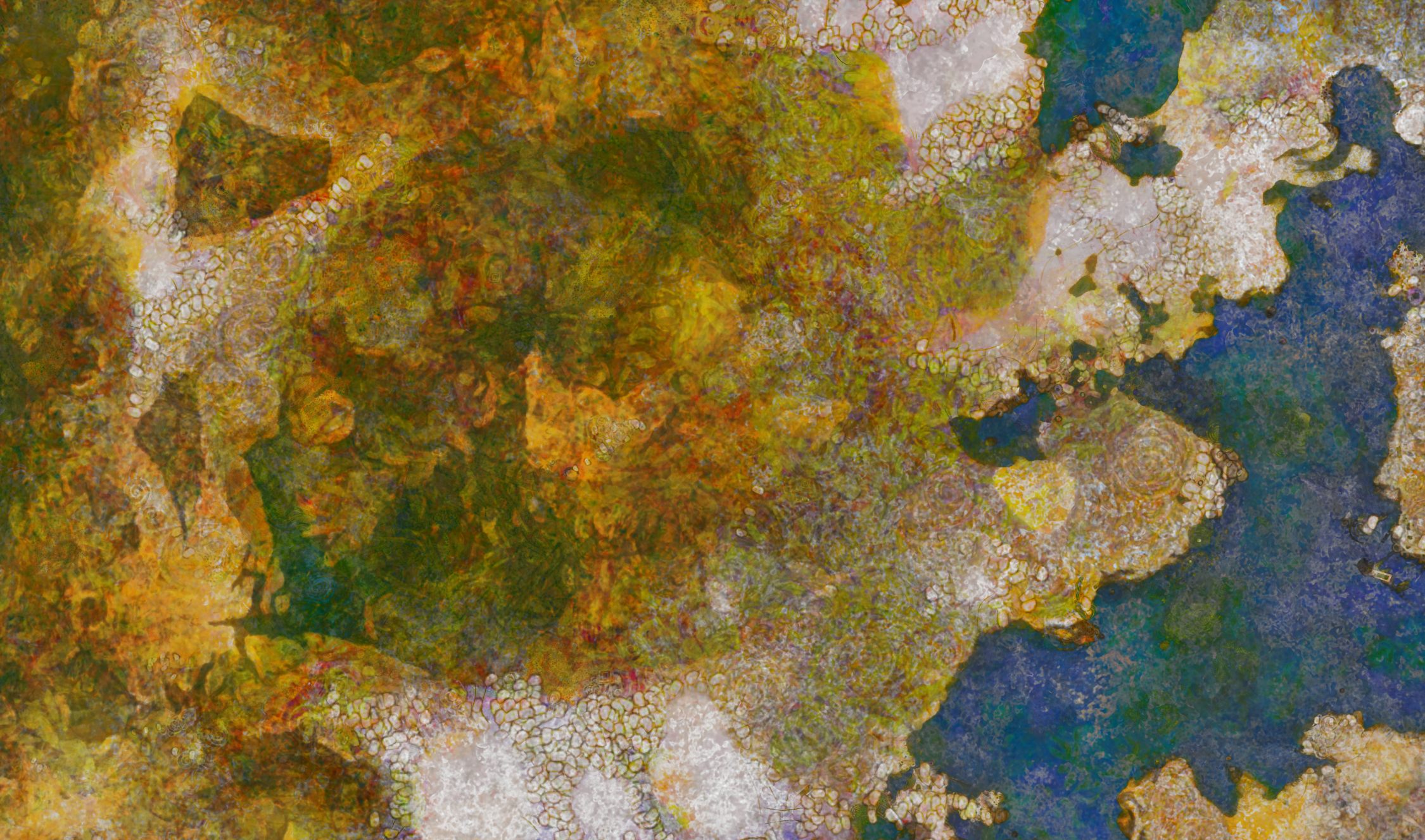
Please tell me what to name so many works when there are too many to properly name, and a date for the name will do? And double as reference, in the data itself (the file name) for when I made it? The original post with the other three variants is here.
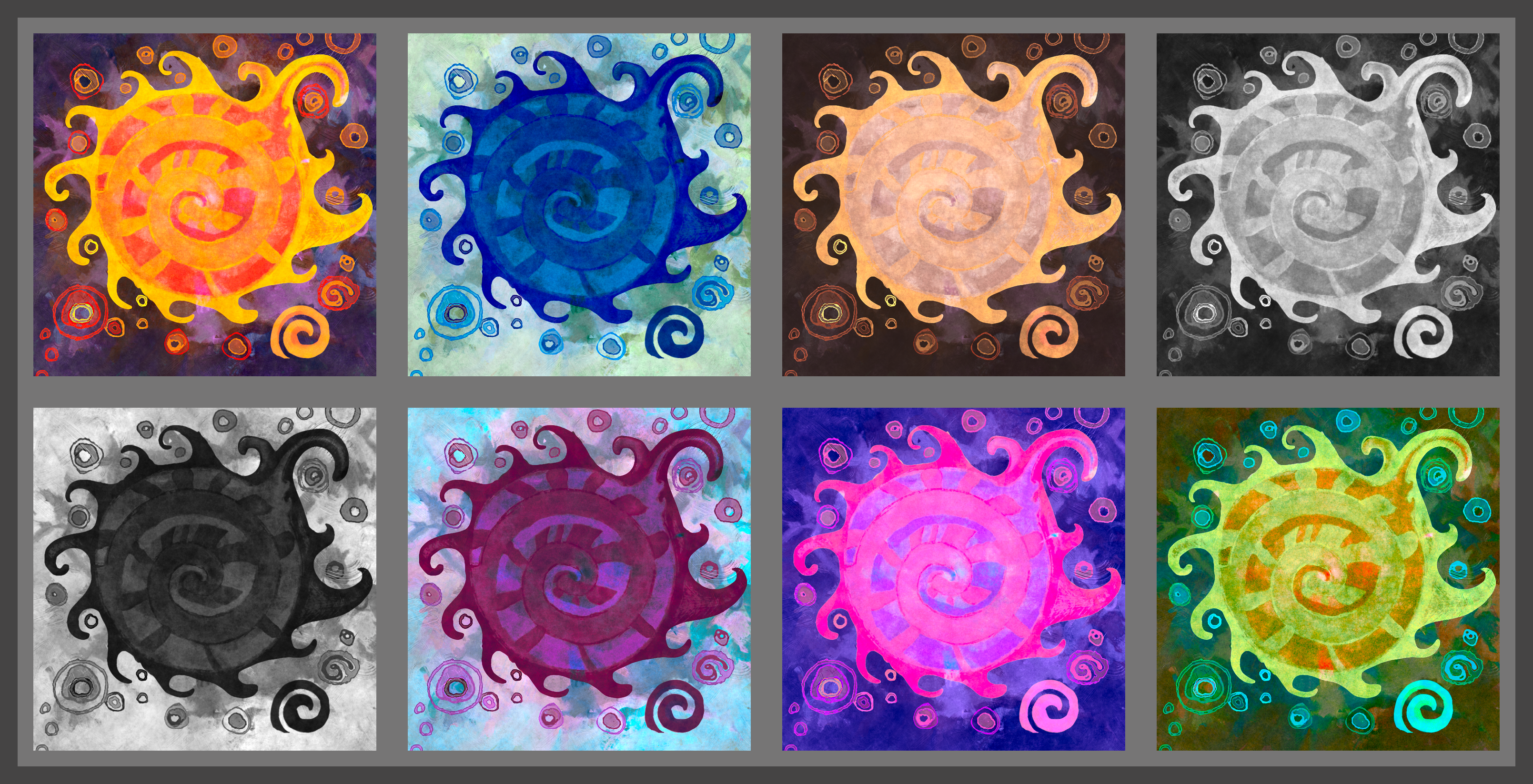
Stars Automatism in 8 variants
Filter Forge Geometry Pattern Factory
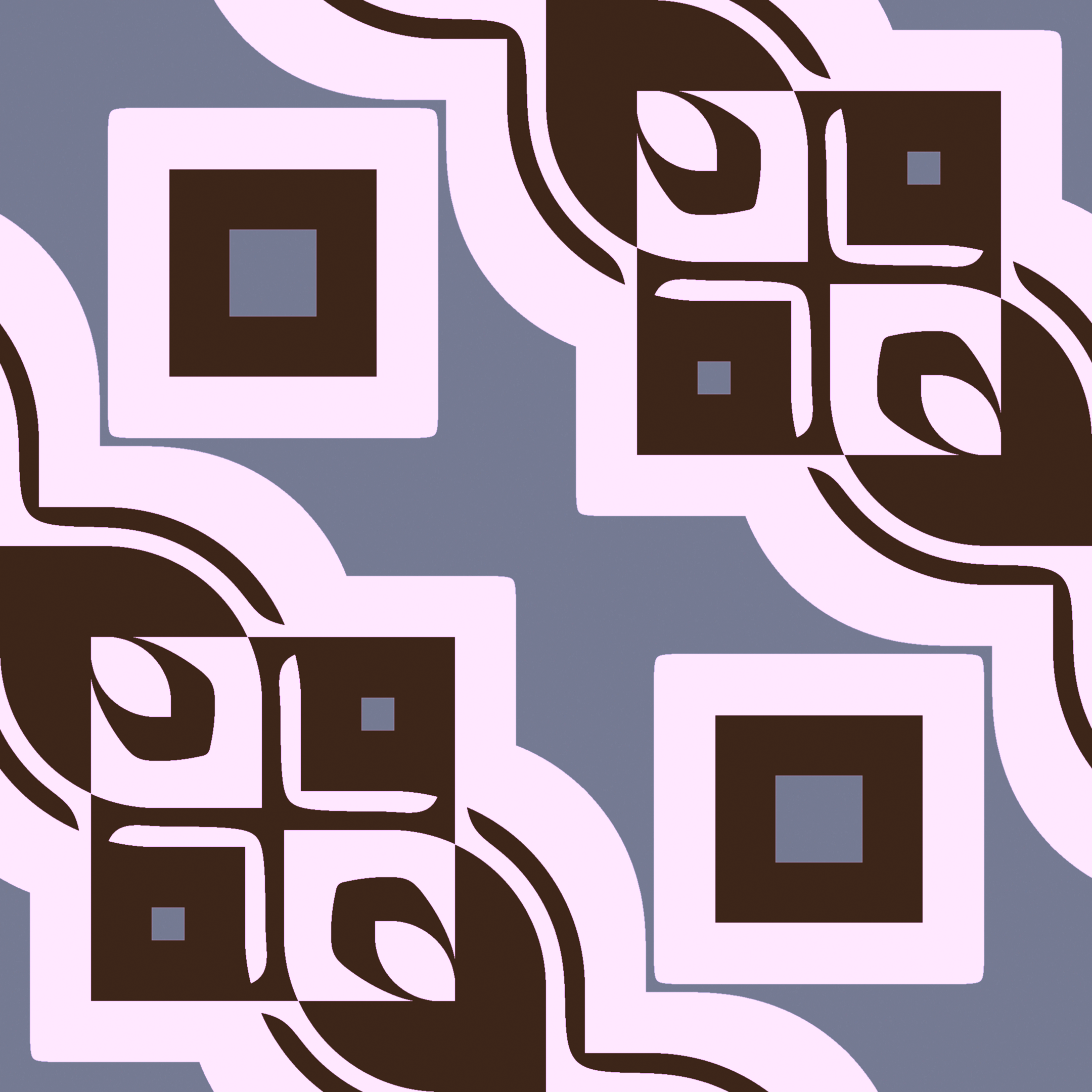
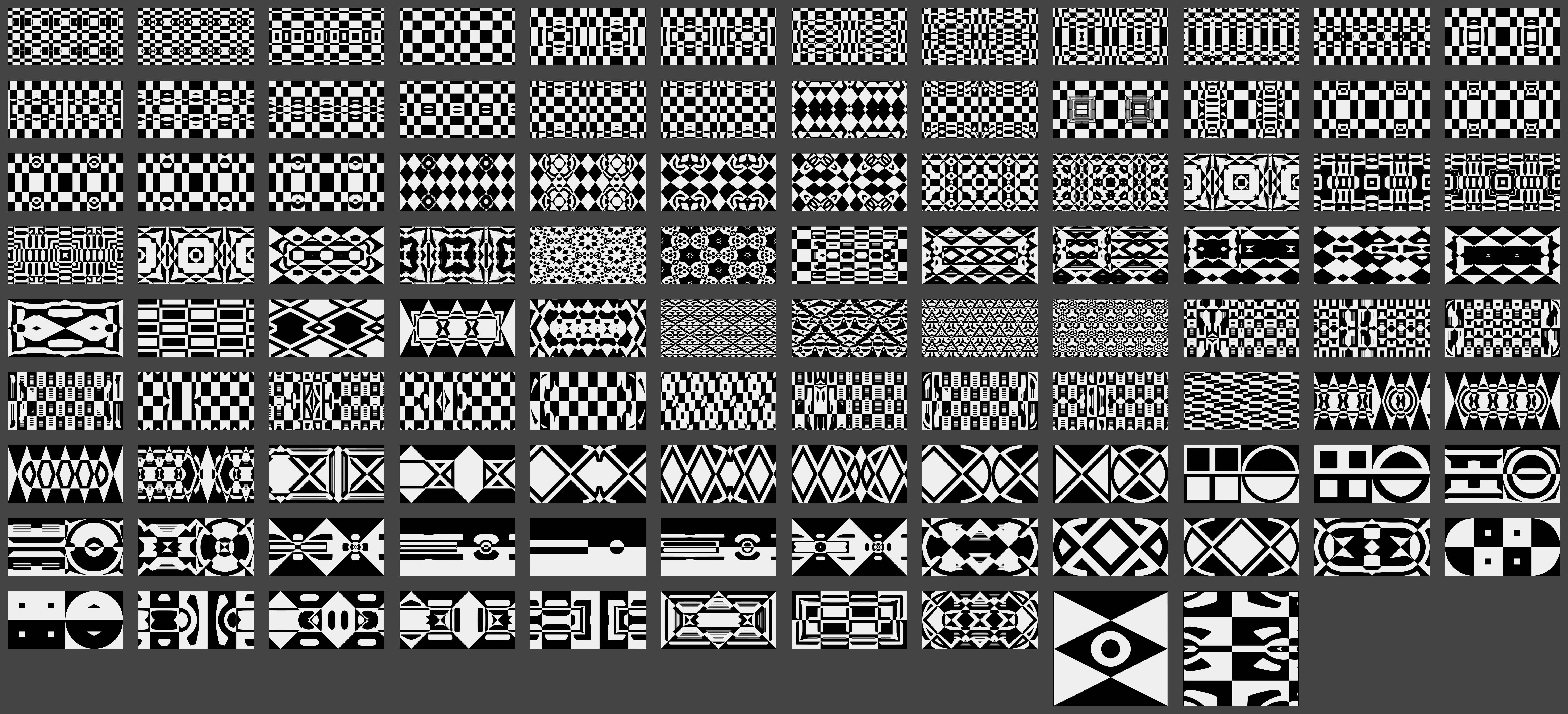
This a work from a generative machine (as such) of untapped variety which I created in Filter Forge. I would love to port the rules for it to a language that runs in web browsers to make a web-based generative work. What raster exports I've made from it have tremendous variety and are (in my biased opinion) very cool. Here's a colorized variant and a contact sheet of many variants. I've made a sequel to it that does cool different kinds of things; also a rich untapped vein of possible art.
Feel free to peruse this blog for more. A lot more art work is pending at this blog when I can publish it.